
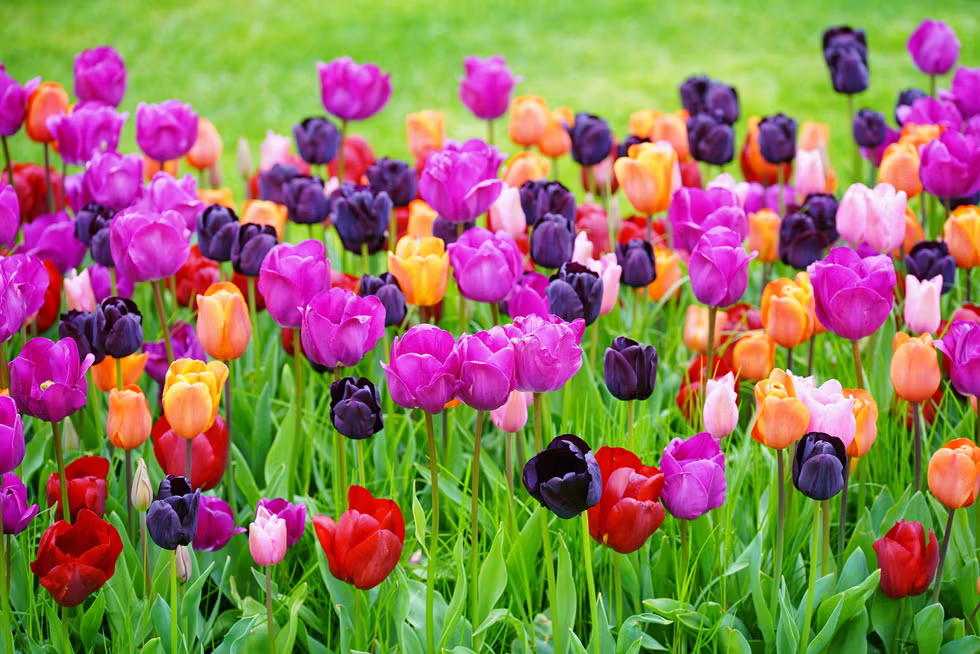

Tulips are technically perennials—they grow from bulbs that are biologically capable of returning year after year. But if you are asking “are tulips annuals or perennials,” the practical answer for many gardeners is that they perform more reliably when treated as annuals. In many U.S. climates, the soil doesn’t stay cold enough or the summer is too wet, causing the bulbs to rot or fail. Planting fresh bulbs each fall ensures that iconic, vibrant spring bloom.
This isn’t a failure on your part. It’s just the reality of how tulips behave outside their native habitat in Central Asia.
The Honest Truth About Tulip Perennialization
In their native environment (mountainous regions of Turkey, Kazakhstan, and surrounding areas), tulips experience cold, dry winters and hot, dry summers. This climate cycle is what allows them to truly perennialize – die back, rest in summer heat, and return with full vigor in spring.
Most American and European gardens don’t replicate this:
- Humid summers cause bulbs to rot or weaken
- Mild winters don’t provide adequate cold stratification in some zones
- Rich garden soil often encourages foliage growth over flowering
The result: tulips bloom beautifully in year one, come back weakly (or not at all) in year two, and disappear by year three. This is normal. You haven’t done anything wrong.
Which Tulips Are Most Likely to Return?
Not all tulips are equally short-lived. Some varieties and species naturalize far better than others.
| Tulip Type | Perennial Reliability | Notes |
|---|---|---|
| Species tulips (T. tarda, T. bakeri, etc.) | High | Small, wild-type; naturalize best |
| Darwin Hybrid tulips | Moderate | Largest flowers; best for return blooming |
| Single Early tulips | Low-Moderate | Bloom early; moderately persistent |
| Double tulips | Low | Heavy flowers; bulbs exhaust themselves quickly |
| Parrot tulips | Low | Showy but rarely return well |
| Fringed tulips | Low | Beautiful but treat as annual |
If returning tulips matter to you, Darwin Hybrids and species tulips are your best bet.
How to Help Tulips Return Year After Year
If you want to maximize the chances of your tulips perennializing, follow these steps:
1. Let the foliage die back completely
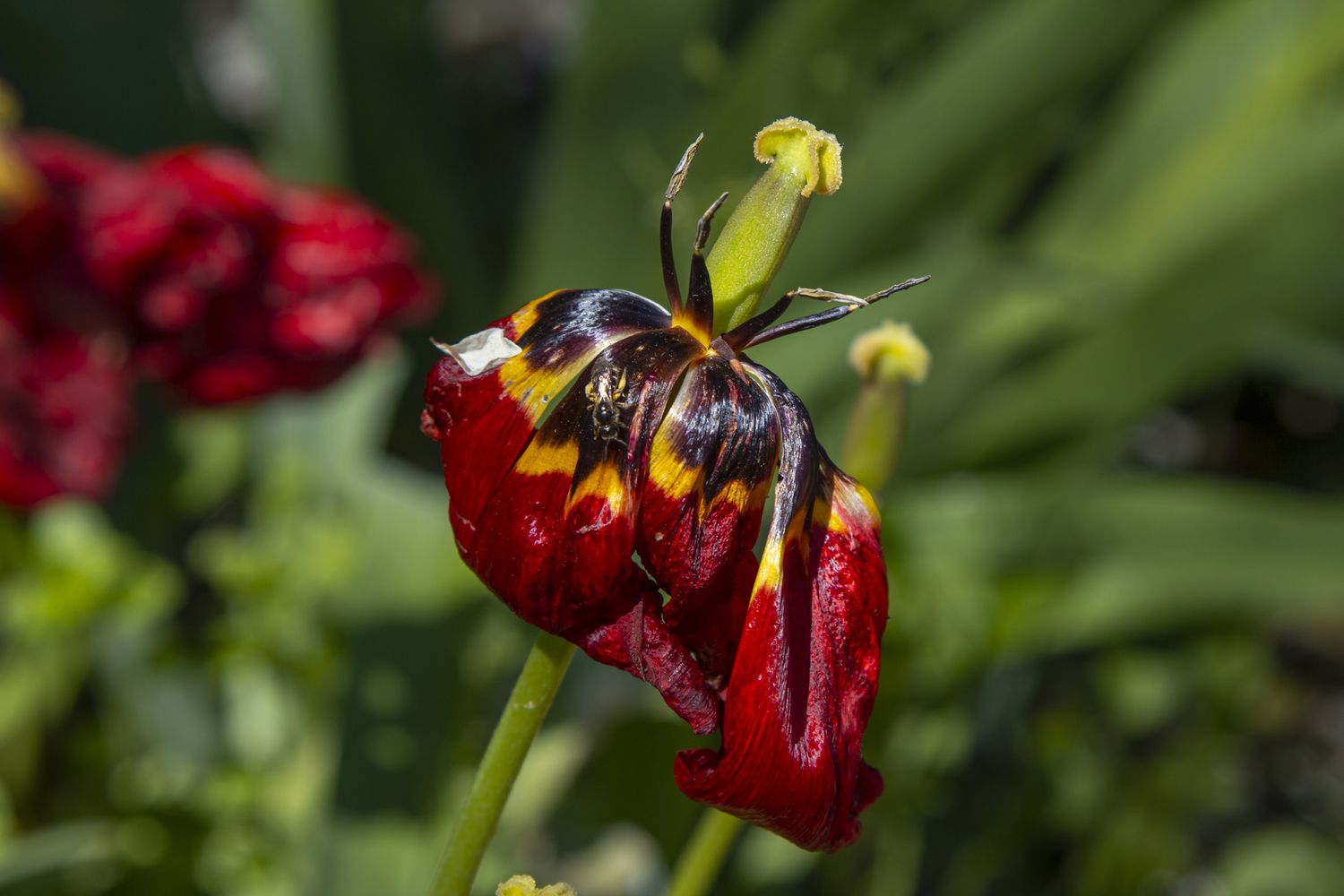
After blooming, resist the urge to cut the leaves. The foliage is photosynthesizing energy back into the bulb for next year. Let it yellow and die naturally – this takes 6 weeks. Tying it up or braiding it while it dies is fine.
2. Cut the spent flower head (but not the stem)
Remove the seed head after petals drop. Seed production drains energy from the bulb. Leave the stem and leaves intact.
3. Reduce summer moisture
After the foliage dies back, try to keep the area relatively dry during summer. If your climate is humid, consider digging and storing the bulbs:
- Lift bulbs in late spring after foliage dies
- Clean off soil; let dry in shade
- Store in a cool, dry, dark place in paper bags
- Replant in fall
4. Plant in well-drained soil
Waterlogged soil is the fastest way to rot bulbs. Add grit or sharp sand if your soil is heavy clay.
5. Plant at the right depth
General rule: plant bulbs at a depth 3× the bulb’s diameter. For standard tulips, this is typically 6-8 inches deep.
Zone Guide: Where Tulips Perennialize Best
| USDA Zone | Tulip Performance |
|---|---|
| Zones 3-5 | Excellent – cold winters ideal for bulb dormancy |
| Zones 6-7 | Good with care – most tulips do reasonably well |
| Zone 8 | Marginal – pre-chill bulbs in refrigerator 6-8 weeks before planting |
| Zones 9-11 | Treat entirely as annual – bulbs won’t survive the heat |
In warmer zones (9+), gardeners often pre-chill bulbs in the refrigerator for 6-8 weeks (in paper bags, away from fruit) before planting in late fall. This simulates the cold stratification the bulb needs to bloom.
The Practical Takeaway
Tulips are perennials that often behave like annuals in typical garden conditions. If you’re in zones 3-6 and plant Darwin Hybrids or species tulips in well-drained soil, you have a good chance of multi-year blooming. If you’re in a warmer, wetter climate – or you want those large, dramatic display tulips – plan on replanting fresh bulbs each fall. The results will be consistently better, and you can choose new colors every year.
